Instituts Scientifiques Soviétiques
Un voyage à travers le temps, l'espace et la science.
Au cours des cent dernières années, la science et la technologie ont profondément transformé nos sociétés. L'URSS était sans doute le pays le plus exalté par le pouvoir de la science, allant jusqu'à l'irrationalité. Les soviétiques ont promu le culte de la science comme un outil idéologique visant à supplanter la religion et à moderniser rapidement le pays. L'URSS a dépensé sans compter pour construire des machines toujours plus grandes et plus sophistiquées, jusqu'à devenir une superpuissance technologique. Ces mondes utopiques de la modernité soviétique se concrétisaient dans des projets mobilisant jusqu'à plusieurs milliers de chercheurs. Si la science se développait, les travaux de recherche, destinés principalement à l'armée, étaient menés à huis clos dans une atmosphère de secret absolu.
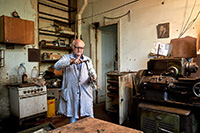
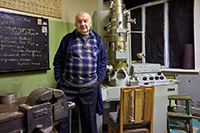
Le statut des scientifiques, autrefois prestigieux, a radicalement changé après l’effondrement du système. Pendant les bouleversements des années 1990, les instituts ont été pratiquement abandonnés, privés de tout financement. Les salaires extrêmement bas — parfois de seulement 5 dollars par mois — ont entraîné une désillusion et une fuite des cerveaux. Malgré les difficultés auxquelles ils ont été confrontés, certains scientifiques ont persévéré et ont consacré leur vie à sauver leurs installations.
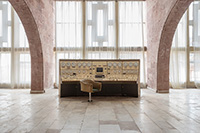
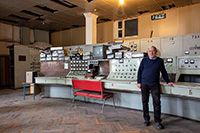
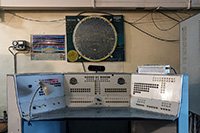
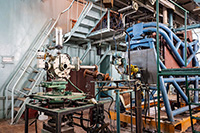
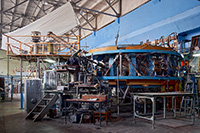
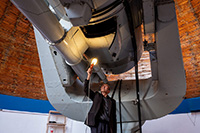
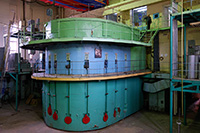
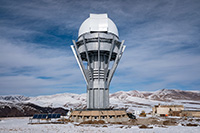
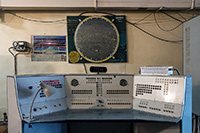
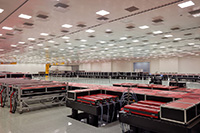
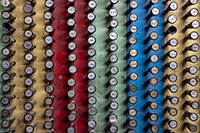
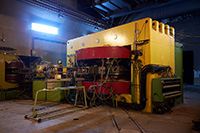
Synchrotron, laboratoire de haute tension, réacteur nucléaire de recherche, radiotélescope, cyclotron, stellarator… À l’heure où la technologie devient de plus en plus immatérielle, ces machines monumentales conçues pour incarner la conquête du savoir apparaissent aujourd'hui comme de véritables sculptures ou tout droit sorties d'œuvres d’auteurs de science-fiction tels que Jules Verne et H. G. Wells. Leurs gigantesques panneaux de commande et leurs mystérieux mécanismes témoignent de notre incessante quête de savoir.
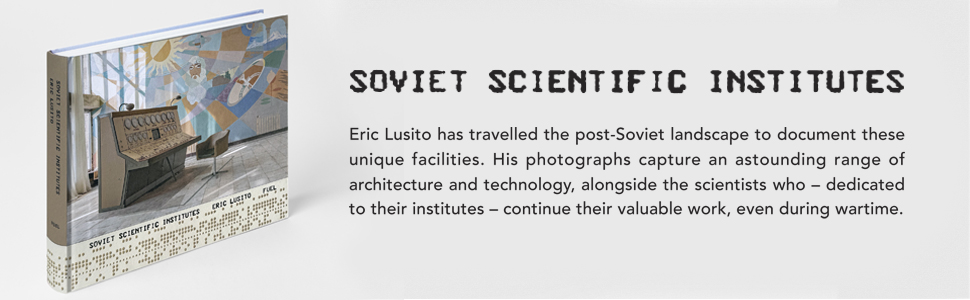
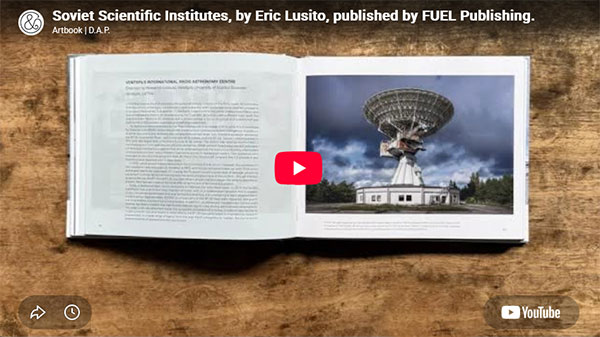
Le livre présente 22 instituts de recherche de l'époque soviétique, répartis dans huit pays (Ukraine, Arménie, Kazakhstan, etc.) et raconte l'ambition scientifique d'une époque ainsi que la grande diversité des destins de ces lieux aujourd'hui.
Le livre propose une réflexion visuelle sur l'évolution de notre rapport à la science, à la technologie et au futur lui-même.
Un photographe au pays des Soviets
— Les EchosLes mégastructures scientifiques de l'ancienne Union soviétique immortalisées dans des photos saisissantes
— New ScientistOn pourrait croire à des œuvres de land art, à des sculptures contemporaines. Quelques arcs de Bernar Venet, quelques plaques en équilibre instable de Richard Serra, mais surtout les entrelacs d’acier de Mark Di Suvero. Mais non, ce sont des instruments scientifiques. Nous sommes chez Kubrick, ou chez Jules Verne.
— LaCritique.OrgÀ la conquête des étoiles : les symboles intemporels de la science soviétique – en images. Le photographe Eric Lusito nous emmène dans un voyage scientifique à travers l'espace et le temps dans un ouvrage consacré aux instituts scientifiques soviétiques
— The GuardianUn équilibre (parfait) entre rigueur documentaire et attrait esthétique.
— EsquireUn portail vers un monde caché où se croisent ambition, secret et science.
— All About PhotoCes installations gigantesques dégagent une impression de puissance, une étrange vision de science-fiction d’un avenir qui ne s’est jamais concrétisé.
— Strong Words MagazineSoviet Scientific Institutes retrace l'héritage d'une société vouée à la recherche. Le photographe Eric Lusito immortalise les étranges installations expérimentales et laboratoires disséminés à travers les pays issus de l'URSS.
— Wallpaper*Lusito documente ces espaces étranges et souvent inaccessibles avec un regard sobre sur leur échelle, leur théâtralité et la persistance de leur vocation.
— Flux MagazineUn témoignage historique majeur, une histoire mêlant secret et ambition démesurée.
— SKY ArteComment Eric Lusito a photographié les machines constuites pour concevoir le futur.
— About PhotographyUn livre remarquable.
— The New WorldL'architecture de la science et des ambitions socialistes.
— Stir WorldDélicieusement vintage, souvent malicieux, jamais moqueur, c'est un nostalgique hommage long de 208 pages.
— artoyz